
Last week, PhD student Frank Viveros Acosta from the University of Bergen visited Hannover, Germany, to participate in the GET Hydrogen & Energy Storage Conference, where he presented his research poster, “Pore-scale influence of gypsum minerals on SRB activity during underground hydrogen storage: a biogeochemical approach,” in the Hydrogen & Energy Storage category. The results highlight how the spatial distribution of nutrients can influence microbial activity over time and how microorganisms can alter the chemical environment surrounding minerals, both locally and on a larger scale during underground hydrogen storage.
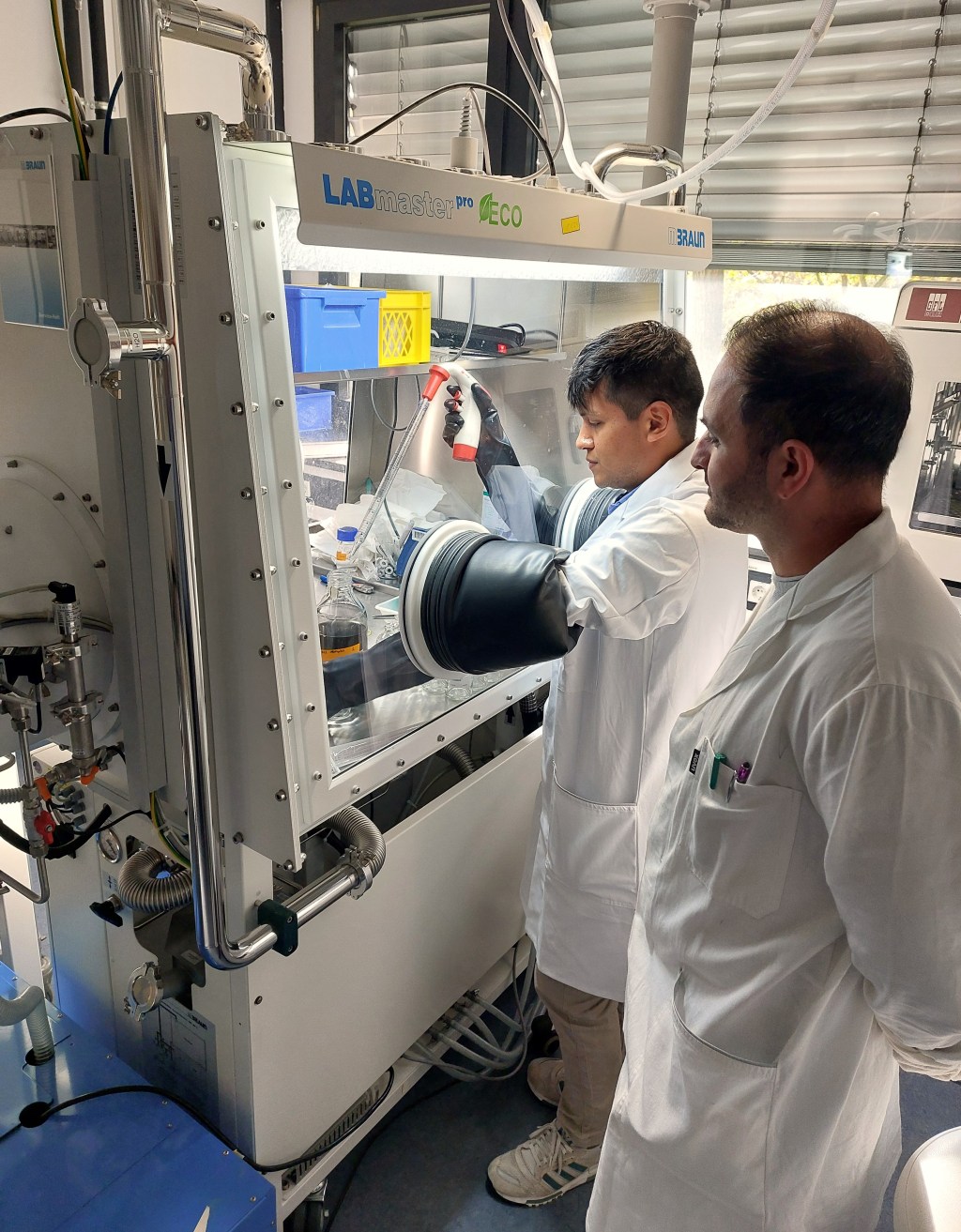
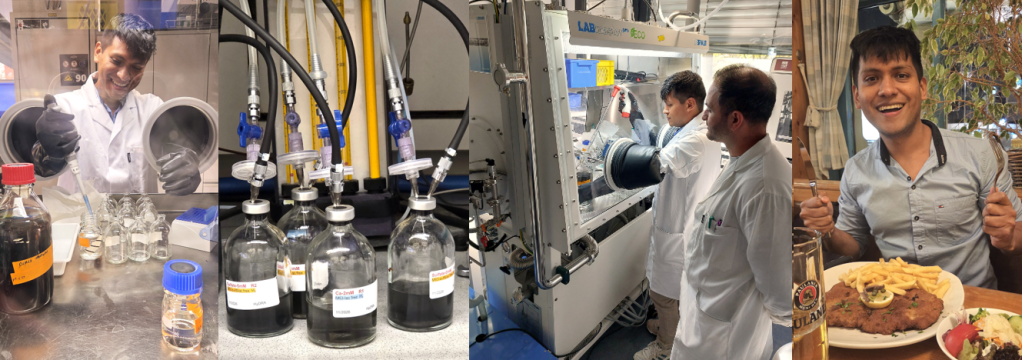
As part of his trip, Viveros Acosta also visited HyDRA project partner Federal Institute for Geosciences and Natural Resources (BGR), where he met with fellow project members Work Package 7 Lead Dr. Martin Krueger and postdoctoral researcher Dr. Nawras Ghanem. During his stay, he gained valuable hands-on experience in the laboratory, learning microbiological techniques and working with anaerobic microorganisms.
Under the guidance of Dr. Ghanem, Viveros Acosta carried out experiments in an anaerobic chamber, preparing incubations with oxygen-sensitive, hydrogen-consuming microorganisms. They also investigated how microbial activity responds to variations in essential nutrient availability and concentrations of mineral-derived ions. In addition, they explored the potential of bacterial activity indicators to detect pH-related chemical changes during microbial hydrogen consumption. The findings from these experiments will contribute directly to Viveros Acosta’s ongoing PhD research.
This work supports the next stage of our research: moving from microscopic observations to larger-scale experimental systems. The aim is to better understand how these processes behave at larger scales, eventually using experimental platforms such as FluidFlower to more accurately replicate underground hydrogen storage conditions.
– Frank Viveros Acosta
The visit provided a great opportunity to strengthen collaboration within the HyDRA project while gaining practical experience and exchanging knowledge across institutions. And beyond the scientific activities, the trip also marked Viveros Acosta’s first visit to Germany! He even had the chance to try the traditional German schnitzel, which received his stamp of approval.


Leave a Reply