
The HyDRA project is making important progress in understanding how hydrogen behaves when stored underground in porous rock reservoirs. Through a combination of geological data collection, laboratory investigations and modelling, the project is building knowledge that can support the assessment and optimisation of future underground hydrogen storage sites across Europe.
One of the project’s key achievements so far is the publication of an open database covering 134 porous reservoir gas storage sites across Europe. The database brings together geological and reservoir information, including depth, temperature, pressure, lithology, porosity and permeability. By making these data openly available, HyDRA provides a valuable resource for comparing reservoir conditions and supporting future hydrogen storage research.
Investigating Microbial Hydrogen Consumption
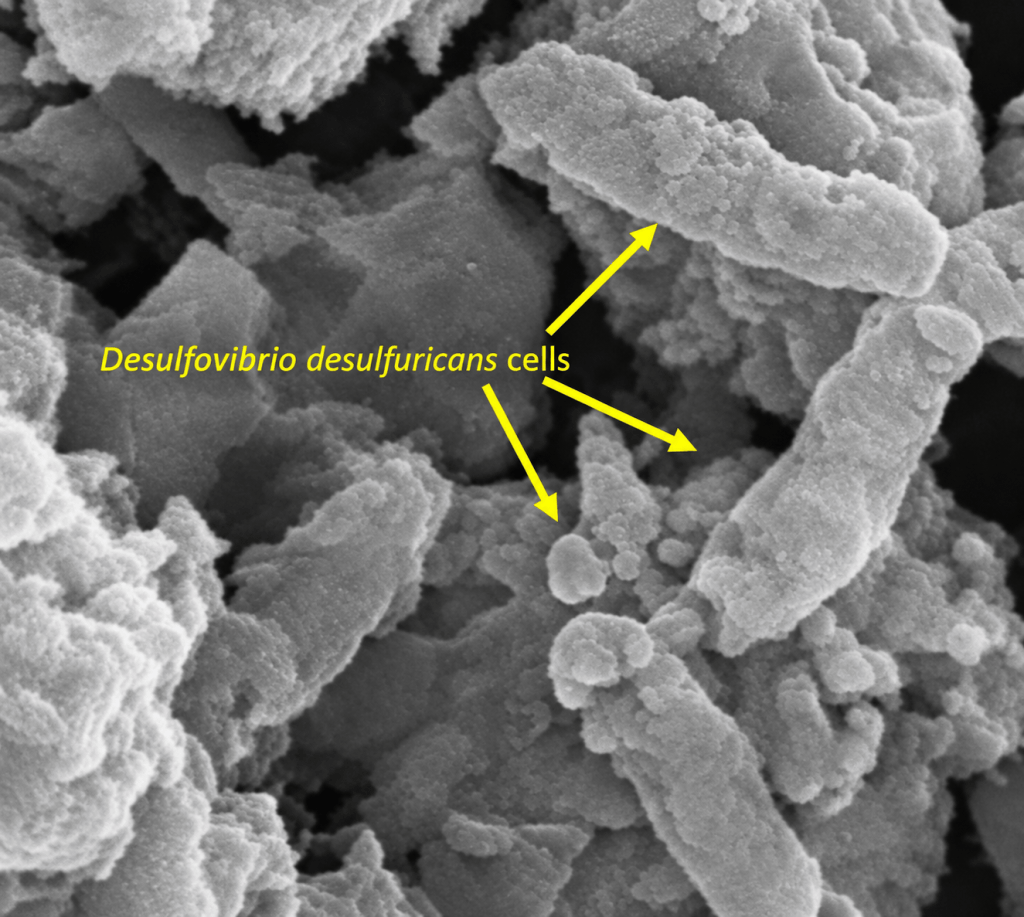
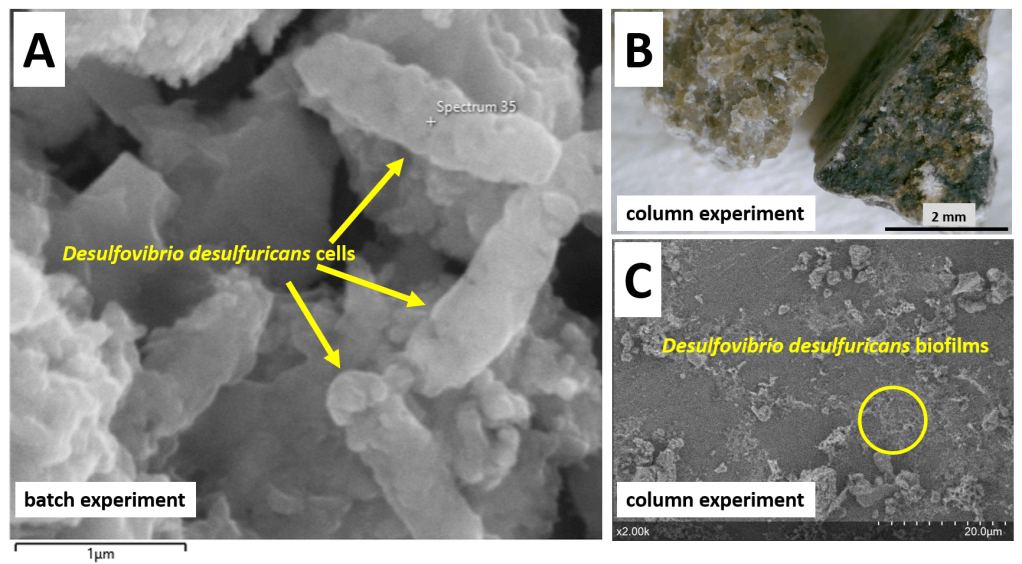
Alongside this European-scale database, the project is carrying out detailed laboratory investigations of reservoir materials. So far, HyDRA has received 21 formation water samples and 34 rock samples from European porous rock reservoirs. Microbial, geological and biogeochemical analyses are currently underway in laboratories across eight of the project’s nine partner organisations. Microbial hydrogen conversion has been observed in eight of the 21 formation water samples investigated to date. In these samples, hydrogen was consumed either through methanogenesis, resulting in methane production, or through sulfate reduction, which can lead to the formation of hydrogen sulphide.
The investigations also show that reservoir mineralogy can influence hydrogen behaviour. Individual abiotic geochemical experiments found increased hydrogen reactions with sandstone containing pyrite. In addition, sulfate-bearing reservoir minerals may provide a source of sulfate for microbial sulfate reduction, potentially increasing the risk of hydrogen sulphide formation. At the same time, results so far indicate that abiotic reactions between hydrogen and reservoir rocks have only a minor effect on the mechanical strength of the rocks.
From Laboratory Results to Reservoir-Scale Predictions
The project is now working to integrate laboratory-derived microbial hydrogen consumption kinetics into reactive-transport and reservoir-scale models. These models will help researchers predict potential hydrogen losses and support site screening and storage optimisation.
By combining European reservoir data with laboratory experiments and advanced modelling, HyDRA is progressively building a clearer picture of the processes that can affect hydrogen underground. To strengthen the evidence base further, HyDRA is continuing to seek reservoir samples from across Europe. There is a particular need to improve the representation of carbonate reservoirs, aquifer reservoirs and porous rock reservoirs with temperatures between 20°C and 80°C. The results will contribute to a stronger scientific basis for assessing the suitability, efficiency and potential risks of porous reservoirs for large-scale hydrogen storage in Europe.


Leave a comment