
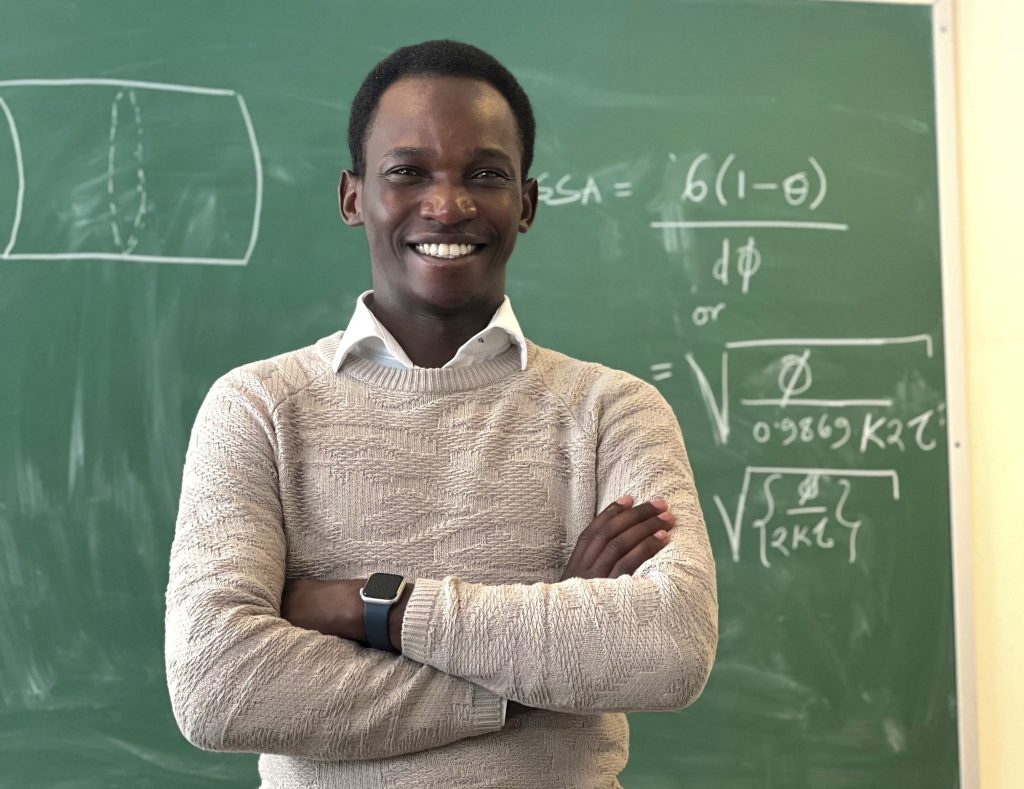
We are excited to welcome four new team members to HyDRA’s partner institutions Technische Universität Clausthal (TUC), the University of Naples Federico II (UNINA), and the Federal Institute for Geosciences and Natural Resources (BGR). We look forward to following their research journeys and the valuable perspectives they will bring to the HyDRA consortium.
Dr. Raymond Mushabe to TUC
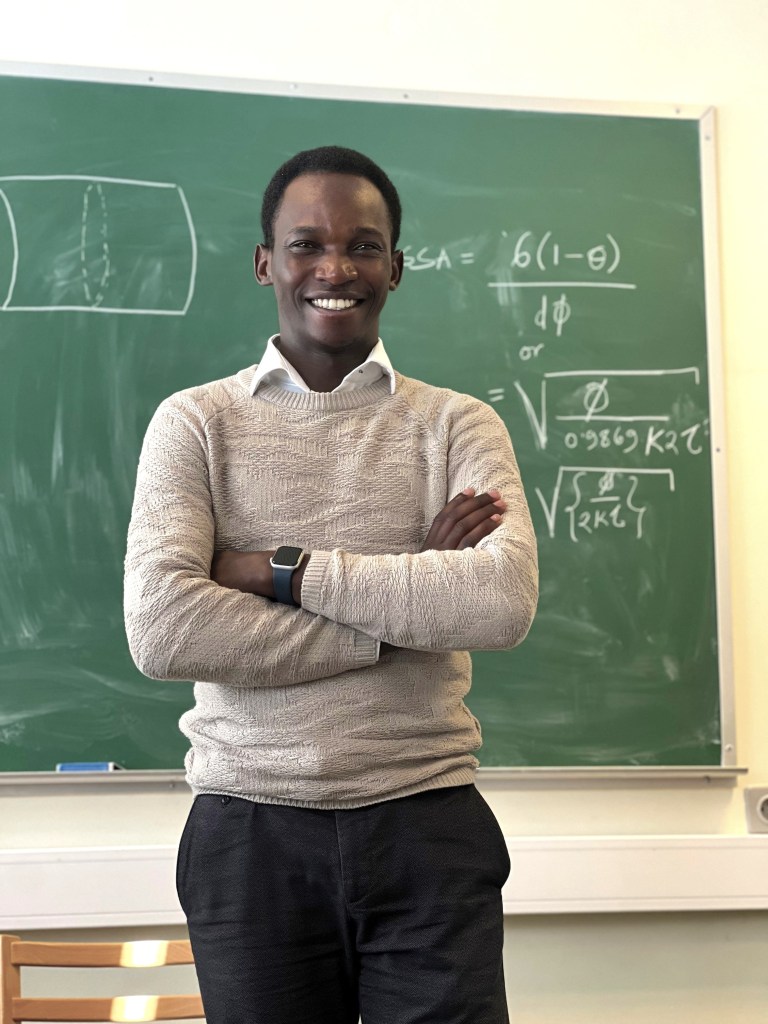
Dr. Raymond Mushabe grew up in Uganda and recently defended his PhD in reservoir physics, conducted at the Department of Physics and Technology at University of Bergen (UiB), in collaboration with Haukeland University Hospital, Equinor, and NORCE. His research provides valuable insights through the development and testing of a reproducible laboratory method for generating high-quality data, as well as the use of advanced imaging techniques, including MRI and PET, to investigate hydrogen transport in porous rocks under microbial influence.
Dr. Giuseppa Anzelmo to UNINA
Dr. Giusy Anzelmo is a geoscientist specialising in underground hydrogen storage (UHS) in salt caverns. She graduated in Palermo with a thesis on Marine Geology and she holds a PhD in Earth Sciences from the University of Naples Federico II (2025). Her PhD focused on the feasibility of UHS within the Messinian evaporitic formations of southern Italy. er research integrates 3D subsurface modelling, multi-criteria site screening (CRS mapping), and laboratory characterisation, micro-CT imaging, mercury intrusion porosimetry and high-pressure cyclic H2 injection. She explored the potential storage area across the Messinian succession in Italy with a focus on the Realmonte mine succession (Sicily).
Her PhD was supported by ENI where she spent time in the petrophysics and subsurface labs. During here research activities she visited the University of Edinburgh. In HyDRA she will focus on the creeping test (triaxial deformation machine), chemical and microstructure characterization pre post batch across a variety of salt and sandstone samples.
Dr. Martina Cascone to UNINA
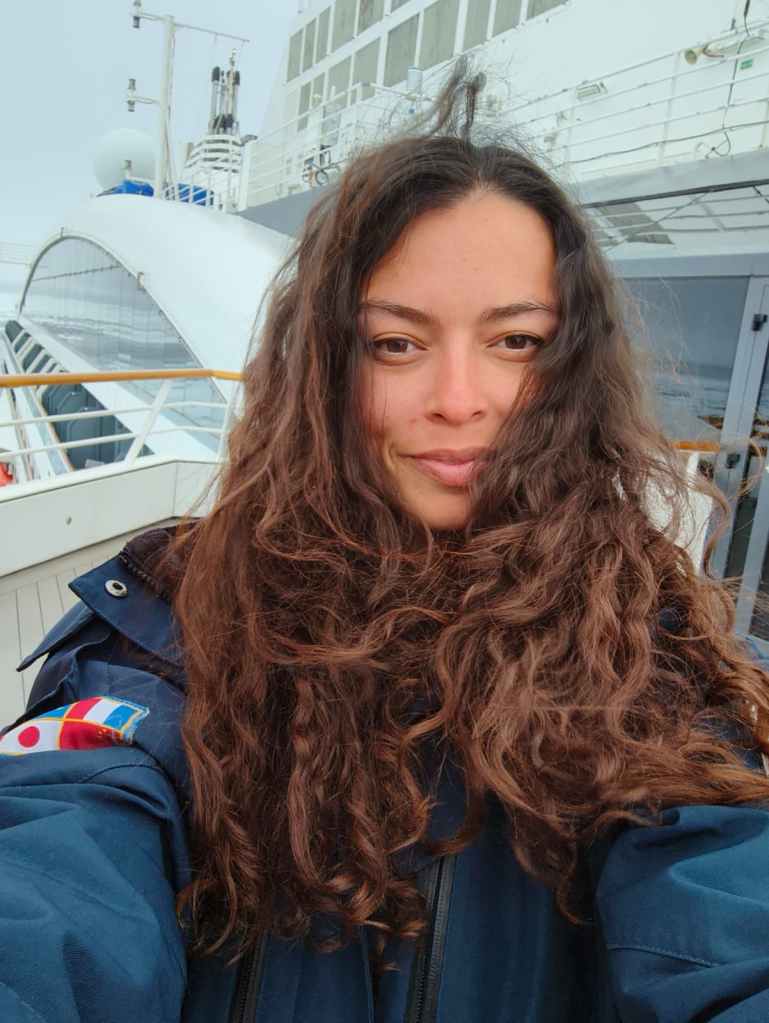
Dr. Martina Cascone holds a PhD in Biotechnology from the University of Naples “Federico II” and works at the interface of microbiology, geochemistry, and energy transition research. Her work focuses on hydrogenotrophic metabolisms in the subsurface and their implications for underground hydrogen storage and natural hydrogen systems. During her doctoral research, she integrated metagenomics, quantitative PCR, gas geochemistry, and microbial physiology to investigate microbial communities in depleted methane reservoirs, geothermal systems, and natural hydrogen seeps.
She conducted industrial research at Eni S.p.A. and performed porosity–permeability experiments during her research stay at the University of Edinburgh. She has participated in numerous international field expeditions, including Arctic, geothermal, and deep-sea hydrothermal systems. Her research aims to understand how microbial hydrogen metabolisms influence subsurface reactivity and how this knowledge can support the safe and efficient deployment of hydrogen-based energy infrastructures.
Dr. Nawras Ghanem to BGR
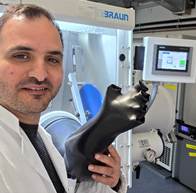
Dr. Nawras Ghanem is a researcher at the Bundesanstalt für Geowissenschaften und Rohstoffe (BGR) and a member of the HyDRA project. His work focuses on the microbiology of subsurface systems, with particular emphasis on microbial processes relevant to underground hydrogen storage.
“I am interested in linking microbial activity with geochemical processes to better understand subsurface systems and support the safe and efficient implementation of underground hydrogen storage,” says Dr. Ghanem.
Within HyDRA, he investigates how native microbial communities respond to hydrogen exposure under reservoir-relevant conditions. His work includes fluid screening experiments to quantify hydrogen consumption and microbial growth, as well as coupled microbe–rock–fluid systems to assess interactions between microbial activity and geochemical transformations. He also performs high-pressure reactor experiments to better represent in situ conditions and to study microbial dynamics under realistic subsurface constraints.
Dr. Ghanem previously conducted research at the Helmholtz Centre for Environmental Research (UFZ), working on environmental microbiology across groundwater and soil systems. His research combined microbial genomics, nanopore sequencing, and bioinformatic analyses to investigate microbial diversity, virus–host interactions, and functional potential in environmental systems.
Welcome to the team!


Leave a Reply